// SPECIES PROFILE · PERENNIAL FORB · NATIVE · GROUNDCOVER
Purple Poppy Mallow
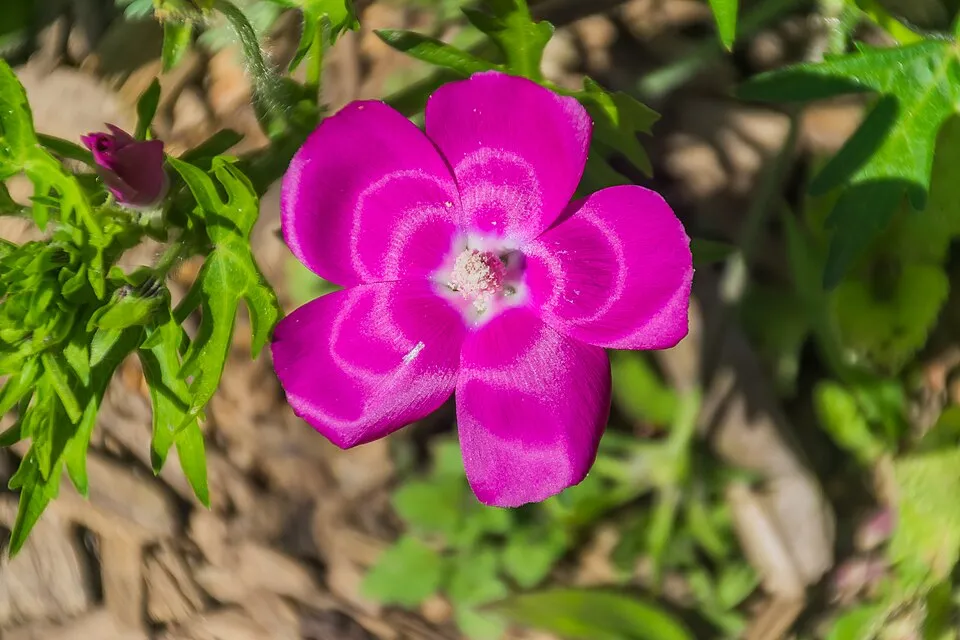
The trailing wine-cup of the Cross Timbers and southern Plains, purple poppy mallow opens its electric magenta cup-shaped flowers each morning from late April through July, closing them by late afternoon. A long, edible parsnip-like taproot — sometimes a foot long and as thick as a child's wrist — lets the plant survive Oklahoma drought and August heat with no irrigation, sprawling across rocky pasture, sandy roadside, and well-drained Tulsa-region garden alike. One of the most drought-hardy and lowest-maintenance showy natives in the regional palette.
- Family
- Malvaceae (mallow family)
- Group
- Trailing herbaceous perennial
- Native range
- S Plains — ND south to TX, west to NM & CO
- USDA hardiness
- Zones 4–9 (Tulsa = 7a/7b)
- Mature size
- 6–12 in tall × 2–4 ft sprawling spread
- Sun
- Full sun (essential)
- Soil
- Well-drained loam, sand, gravel, rocky clay; pH 6.0–8.0
- Water
- Highly drought-tolerant once established
- Bloom time
- April–July; sporadic to October
- Lifespan
- 5–15 years from a single taproot
- Pollinators
- Native bees, syrphid flies, small butterflies
- Edibility
- Taproot edible — documented Plains food plant
- Wildlife value
- Pollinator nectar · Pyrgus skipper host · deer-resistant
- Ecological role
- Wine-cup blooms · sprawling groundcover · drought-hardy