// SPECIES PROFILE · SHRUB · NATIVE · EDIBLE NUT
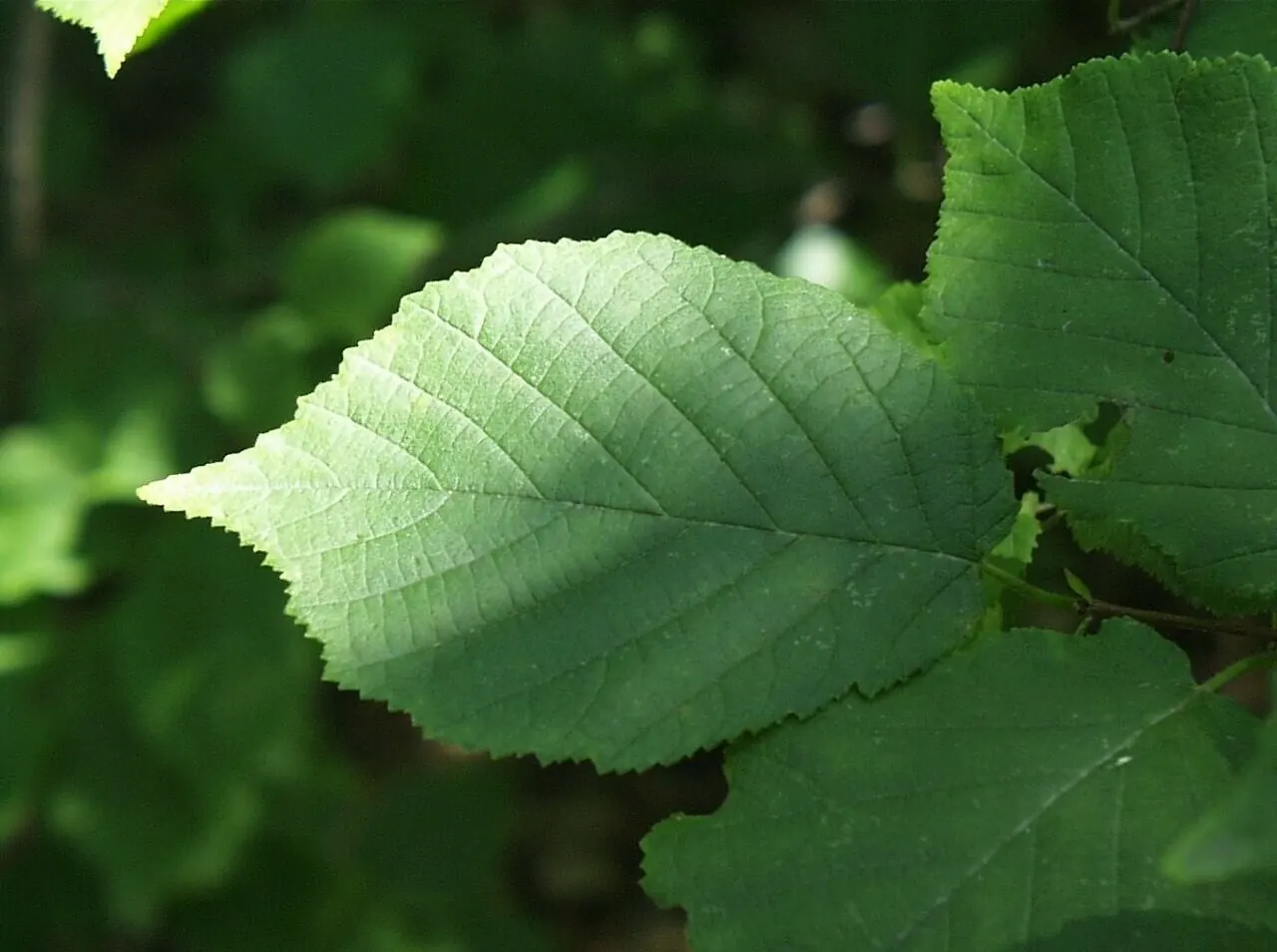
American Hazelnut
The eastern North American native filbert — a multi-stemmed, suckering shrub of woodland edges, savannas, and hedgerows whose yellow-tan male catkins dangle conspicuously from leafless February branches and whose small, sweet, fully edible nuts ripen in late summer inside fringed leafy bracts. Corylus americana reaches the western edge of its range in eastern Oklahoma, growing wild on the margins of the Ozark plateau and persisting in old fence rows from Tulsa eastward. It is one of the most rewarding edible native shrubs for a NE Oklahoma food-forest hedgerow.
- Family
- Betulaceae (birch family)
- Group
- Deciduous shrub — multi-stemmed, root-suckering
- Native range
- SE Canada south to Georgia, west to E. Oklahoma, E. Kansas, & Saskatchewan
- USDA hardiness
- Zones 4–9 (Tulsa = 7a/7b)
- Mature size
- 8–16 ft tall × 8–16 ft wide; thicket-forming
- Sun
- Full sun for best nut crop · tolerates part shade
- Soil
- Adaptable — rich loam to rocky chert; pH 5.5–7.5
- Water
- Medium — drought-tolerant once established
- Sex / pollination
- Monoecious, wind-pollinated; self-incompatible — plant 2+ unrelated genotypes
- Catkin shed
- February – early March in NE OK
- Female bloom
- February — tiny crimson stigmas on bud tips
- Nut ripe
- Late August – September
- Wildlife value
- Catkins for early bees · nuts for squirrels, jays, turkey, deer · thicket cover
- Ecological role
- Edible nut shrub · earliest spring catkins · hedgerow staple